R22 Provider Portal – User Guide
All care team members or providers associated with instED are preregistered in the system

For patients living with COPD, heart failure, diabetes, or asthma, flare-ups can be frightening. Learn when in-home urgent care may be a safe and effective alternative…
Read Time: 5 min
Making the right decision can save you time, stress, and unnecessary medical costs — while still ensuring you receive safe, appropriate treatment. Here’s how to know the difference.
Some symptoms always require emergency services. If you or someone near you is experiencing any of the following, call 911 or go to the nearest emergency department immediately:
Emergency departments are equipped for critical, life-threatening conditions and should never be delayed in these situations.
Many emergency room visits involve conditions that are urgent — but not life-threatening. These often include:
These issues require prompt care, but they typically don’t require the full resources of a hospital emergency department.
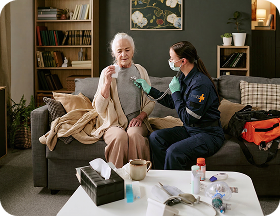
At-home acute care delivers hospital-level medical treatment directly to your home. Instead of traveling to an ER, a licensed medical team comes to you equipped with:
Care is provided by experienced clinicians trained in emergency medicine. For appropriate conditions, treatment at home can be just as safe and effective as care delivered in a traditional facility.
Emergency departments often prioritize the most critical cases first. If your condition isn’t life-threatening, you may wait hours before being seen.
Hospitals and ERs treat patients with a wide range of infectious conditions. Receiving care at home limits exposure to other illnesses.
Being treated in your own home reduces stress and eliminates travel — especially helpful for seniors, children, or individuals with mobility challenges.
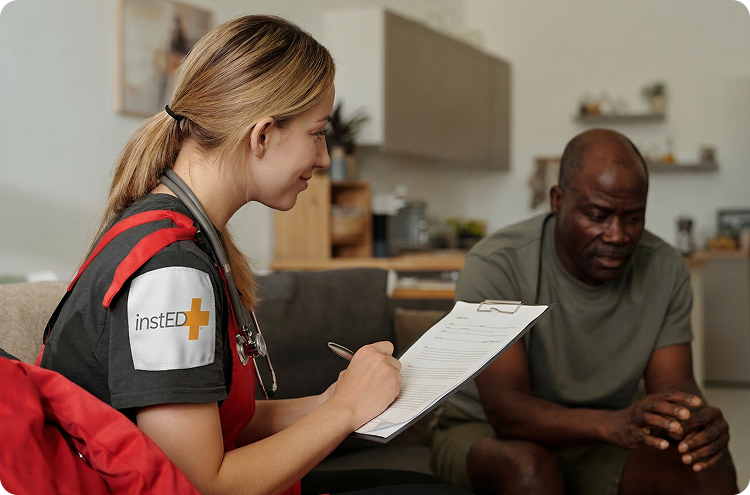
At-home providers focus entirely on your care during the visit, often allowing for more thorough evaluation and discussion.
Ask yourself these questions:
If the answer to any of these is yes, call 911.
If your condition is urgent but stable — such as worsening infection symptoms, dehydration, or a minor injury — at-home acute care may be a safe and efficient alternative.
When in doubt, calling a medical professional for guidance is always the right choice. Trained nurses can help determine the safest level of care based on your symptoms.
Healthcare is evolving. Many conditions that once required an ER visit can now be safely treated at home with advanced portable diagnostics and experienced providers.
Understanding your options empowers you to make confident decisions when you need care most.
If you’re ever unsure, seek medical guidance immediately — and in any life-threatening emergency, call 911.
Read Time: 5 min
All care team members or providers associated with instED are preregistered in the system